

xecutive Overview of the Dec 25 Electoral Milestone
The municipal elections held in Mogadishu on Thursday, December 25, 2025, represent a paradigm shift in the political architecture of the Horn of Africa. For the first time in fifty-six years, the residents of Somalia’s capital city participated in a direct “one-person, one-vote” (1POV) election, an event intended to serve as a pilot program for the national polls scheduled for 2026.1 This exercise was not merely a local administrative reorganization but a high-stakes test of the Federal Government of Somalia’s (FGS) ability to exercise sovereignty, implement biometric infrastructure, and provide security in an environment characterized by both institutional fragility and a persistent asymmetric threat from al-Qaeda-linked al-Shabaab militants.3
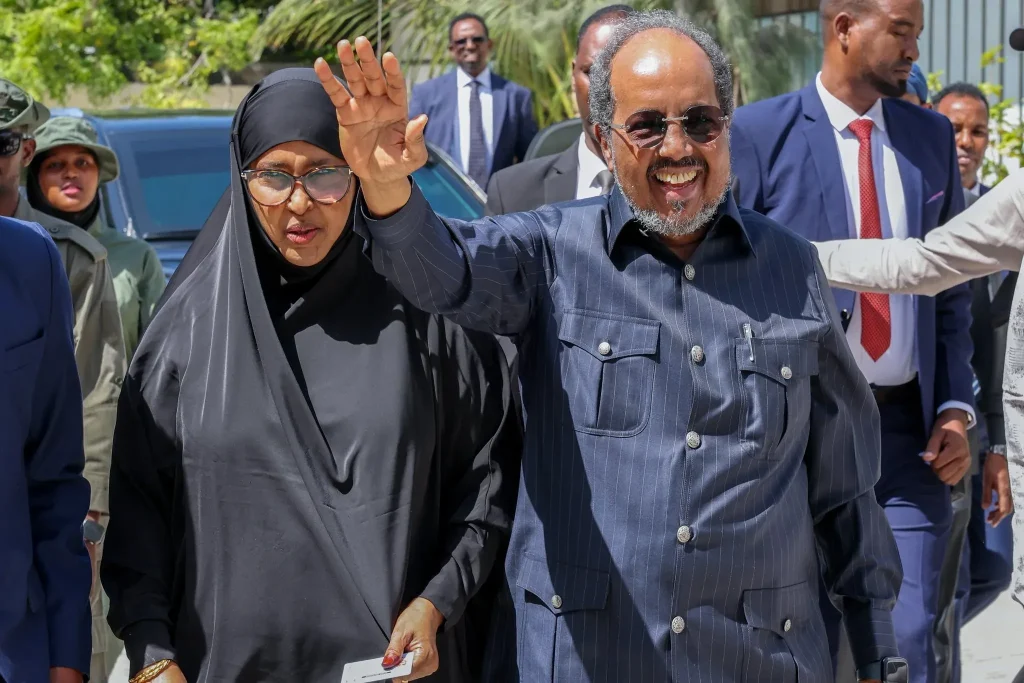
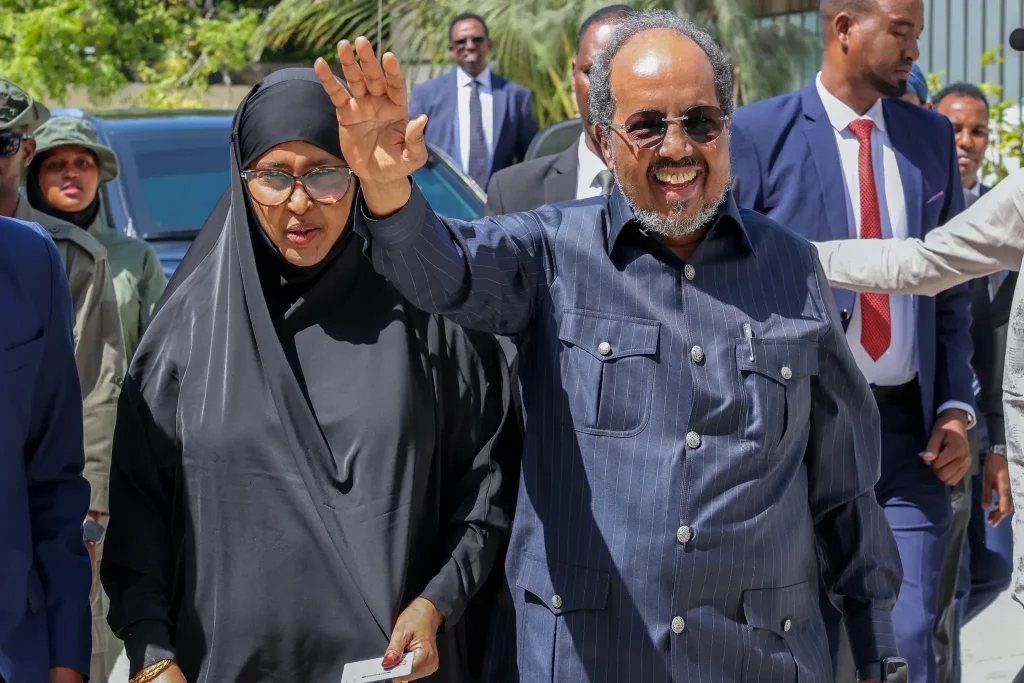
The transition away from the 4.5 clan-based power-sharing system, which has defined Somali politics since 2004, is fraught with significant geopolitical risk. While the FGS and international partners view the Mogadishu vote as a restoration of popular agency, a broad coalition of opposition leaders and semi-autonomous regional states perceive the move as a unilateral centralization of power by President Hassan Sheikh Mohamud’s administration.1 The successful technical execution of the vote—conducted under a total security lockdown—must be balanced against the deep political rifts manifested in the Kismayo Declaration and the ongoing boycott by the states of Puntland and Jubaland.6 This report analyzes the operational, legislative, and security dimensions of the December 2025 elections, providing a comprehensive assessment of their implications for Somali stability and the viability of the 2026 federal transition.
| Key Metrics of the 2025 Mogadishu Municipal Election | Data Point |
| Date of Election | Thursday, December 25, 2025 2 |
| Registered Voters in Banadir Region | ~1,000,000 9 |
| Number of Candidate Postings | 390 District Council Seats 2 |
| Total Candidates Participating | 1,605 2 |
| Deployment of Security Personnel | 10,000 3 |
| Number of Political Parties/Associations | Up to 20 1 |
| Population of Mogadishu (Citywide) | ~3,000,000 2 |
| Last Comparable Direct Election | 1969 1 |
Operational Analysis of the December 25 Polls
Tactical Execution and Logistics
The operationalization of the vote on December 25 required an unprecedented mobilization of state resources. To facilitate the movement of voters and mitigate the risk of vehicle-borne improvised explosive device (VBIED) attacks, the FGS imposed a complete lockdown on the capital. All streets were closed to vehicle traffic, and the city’s economic engines—the Port of Mogadishu and the Aden Adde International Airport—remained shuttered for the duration of the polling window.2 This total cessation of activity highlights the extreme security trade-offs necessary to conduct a direct vote in a high-threat environment.
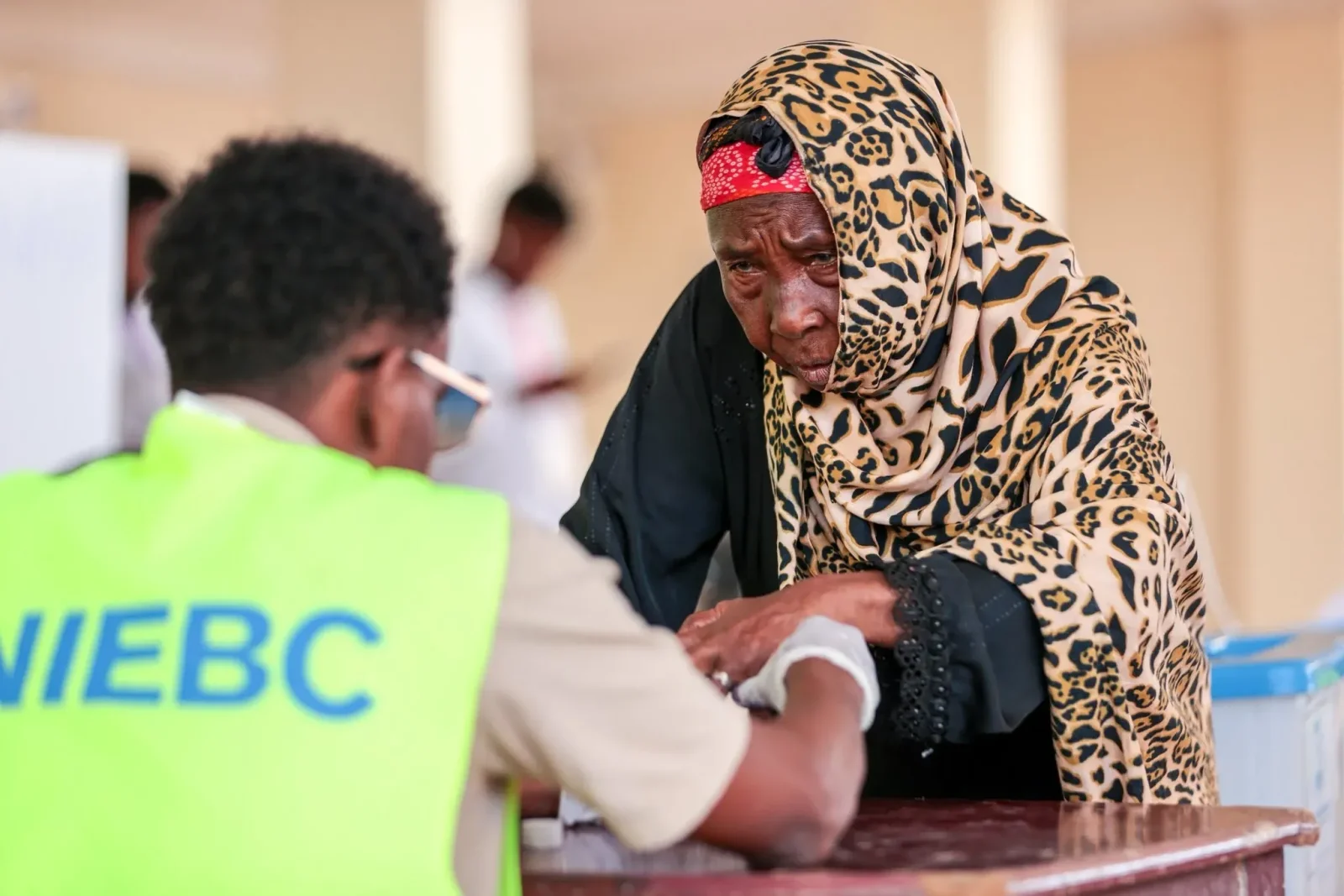
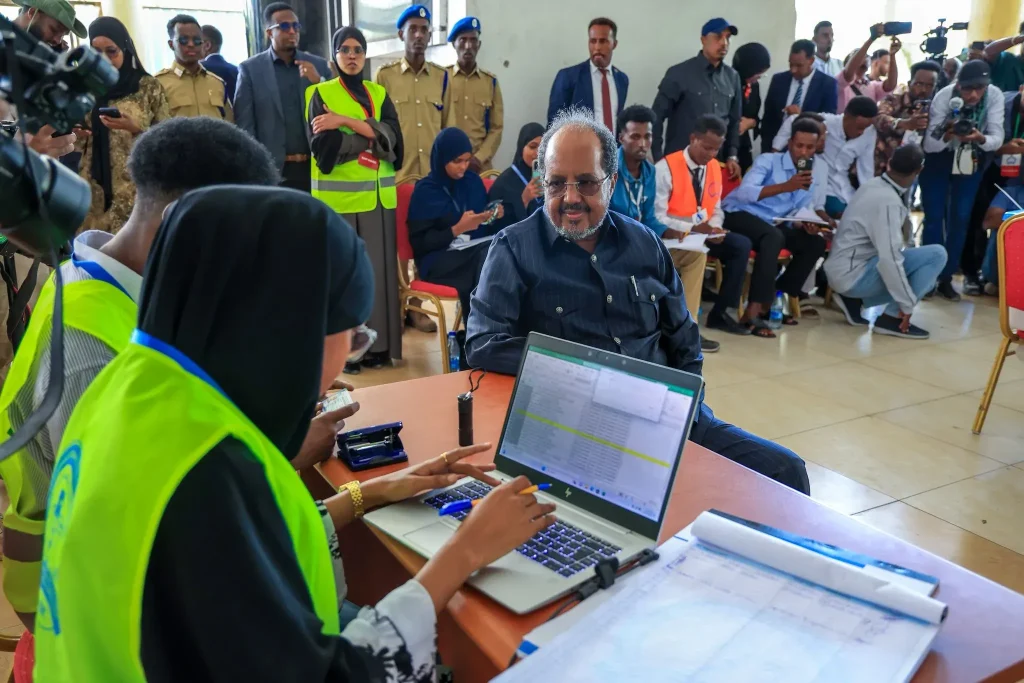
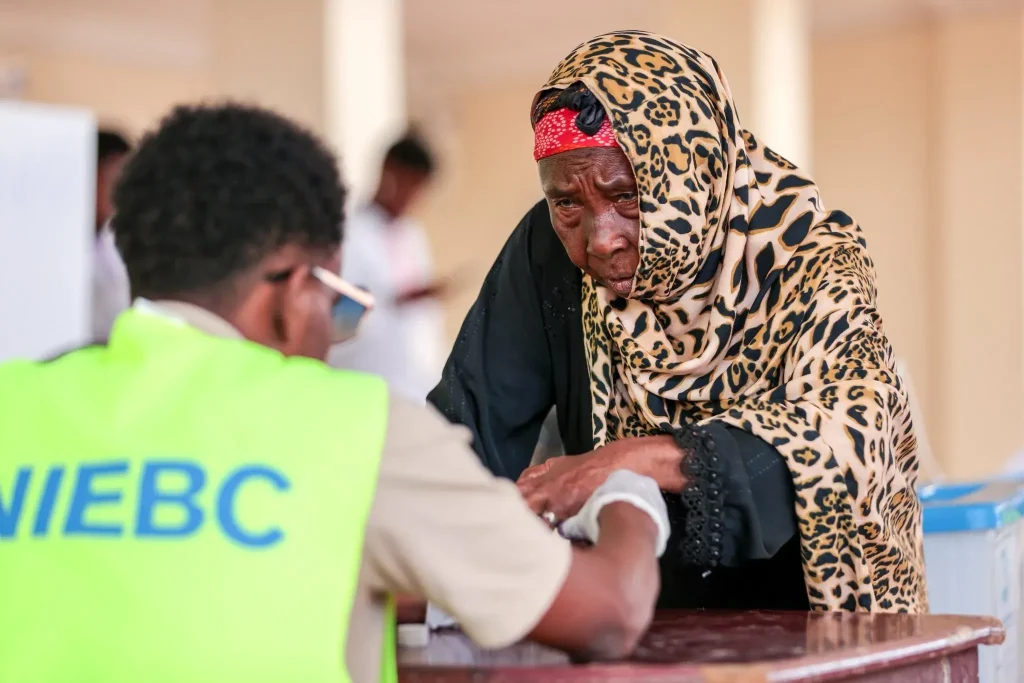
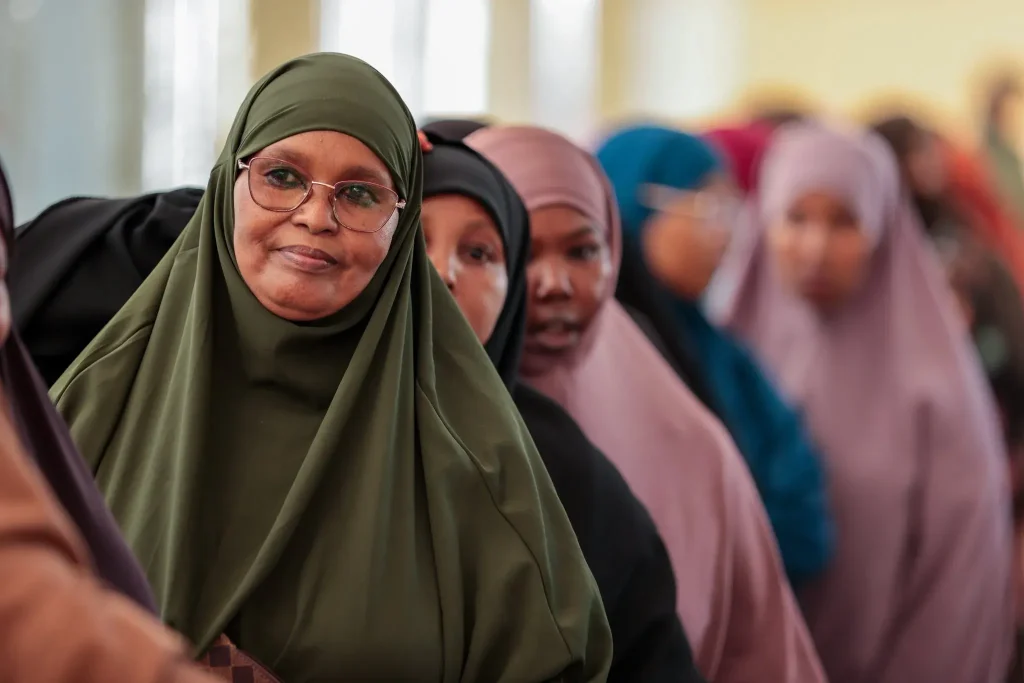
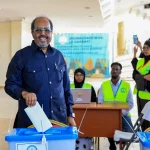
Residents formed long queues at 523 polling stations across the city’s 16 participating districts as early as dawn.1 The participation of older citizens, such as 65-year-old Addey Isak Abdi, who noted that this was her first opportunity to vote in her lifetime, underscores the generational significance of the transition.2 However, the logistical success was geographically uneven. While the National Independent Electoral and Boundaries Commission (NIEBC) planned for 20 districts, only 16 were fully operational for the vote, reflecting persistent administrative and security gaps in the peripheries of the Banadir region.10
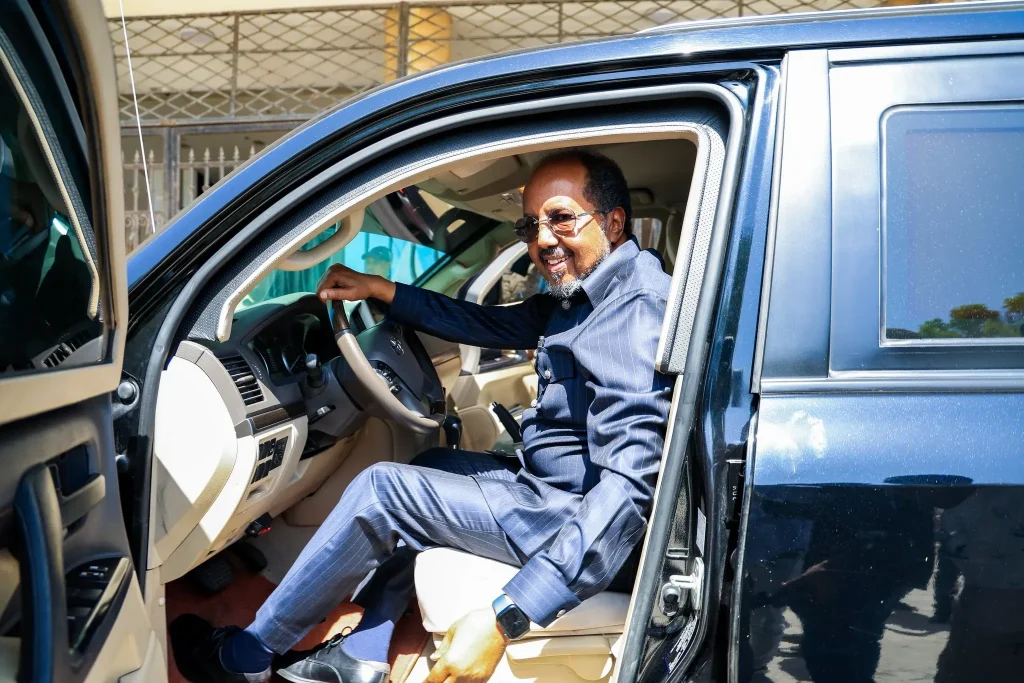
The election focused on the selection of 390 district council members. Under the newly established regulatory framework, these council members will eventually be responsible for selecting the Mayor of Mogadishu.2 This tiered approach—direct election for local representatives and indirect selection for the mayor—serves as a compromise between absolute universal suffrage and the practicalities of governance in a city where the constitutional status of the capital remains a point of intense dispute between the federal government and regional states.1
Biometric Registration and Technological Integrity
Central to the 2025 electoral process was the deployment of biometric voter registration (BVR) systems. Initiated on April 15, 2025, in the Shangaani district, the registration campaign was designed to create a “clean” voter roll, eliminating the duplicate voting and elite manipulation prevalent in the 4.5 clan-based system.10 The NIEBC reported that nearly one million individuals were successfully registered in Mogadishu by the conclusion of the campaign in September 2025.9
The demographic composition of the registered electorate indicates a significant shift toward youth-led politics. Approximately 69% of the total registrants were between the ages of 18 and 34.10 This “youth bulge” within the voter rolls suggests that the historical grip of clan elders may be weakening in urban centers. Conversely, gender participation remains an area of concern; of the million registered voters, only 37% were female, while 63% were male.10 This disparity suggests that despite the rhetoric of universal suffrage, traditional cultural barriers to political participation remain entrenched.
| Demographic Breakdown of Registered Voters in Mogadishu (2025) | Percentage |
| Male Registrants | 63% 10 |
| Female Registrants | 37% 10 |
| Youth (Aged 18-34) | 69% 10 |
| Total Registered Volume | ~1,000,000 10 |
Historical and Institutional Context of Somali Governance
The Legacy of the 1969 Coup and the 4.5 System
To understand the weight of the 2025 elections, one must examine the long hiatus of democracy in Somalia. The country’s last direct national election occurred in 1967, followed by local elections in 1969.2 In October 1969, General Mohamed Siad Barre seized power in a military coup, suspending the constitution and establishing a revolutionary regime that lasted until the state’s collapse in 1991.1 The subsequent decades of civil war led to the total disintegration of formal electoral institutions.
In 2004, the introduction of the indirect election model was a pragmatic necessity. By allowing clan elders to select representatives, the system sought to create a consensus-based government in a landscape where central authority was non-existent and clan militias held sway.2 However, as the state began to rebuild under the Federal Government of Somalia (FGS) after 2012, the 4.5 system became increasingly associated with institutionalized corruption.2 Critics argued that politicians preferred the indirect model because it allowed for the bribery of a small number of delegates, effectively pricing out most of the population from the political process.2
The 2024 Restoration of Suffrage
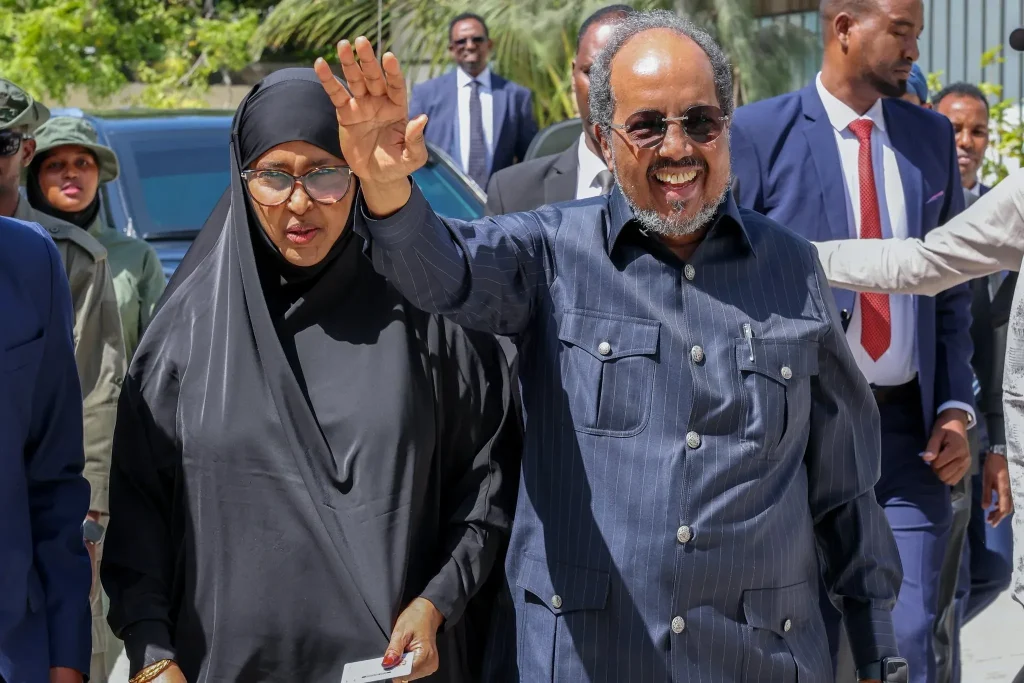
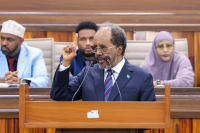
The legislative path to the 2025 Mogadishu vote began in late 2024 with the passage of three landmark laws: the National Independent Electoral and Boundaries Commission Establishment Law, the Political Associations and Political Parties Law, and the National Electoral Law.10 These statutes officially restored universal suffrage and mandated a shift to a multi-party system.2 President Hassan Sheikh Mohamud’s administration championed these reforms as a fulfillment of a 2023 pledge to return the country to direct democracy.16
| Legislative Milestone | Date Enacted | Core Function |
| NIEBC Establishment Law | November 2024 | Created the permanent electoral management body 10 |
| Political Parties Law | November 2024 | Regulated the transition to a multi-party system 10 |
| National Electoral Law | November 2024 | Formalized the “one-person, one-vote” mechanism 10 |
| August Compromise Agreement | August 25, 2025 | Stipulated parliament will elect the president in 2026 2 |
Despite these legal advancements, the political reality forced a significant compromise in August 2025. Following intense pressure from the National Salvation Forum—a coalition of opposition leaders including former presidents and prime ministers—the government agreed that while lawmakers would be directly elected in 2026, the President of Somalia would still be chosen by the parliament.2 This partial reversal of the presidential universal suffrage goal highlights the deep-seated fears among the political elite that a directly elected presidency would lead to a consolidation of executive power and a potential term extension for the incumbent.1
Security Architecture and the Insurgency Threat
Al-Shabaab’s Strategic Encirclement
The conduct of the December 25 elections took place against the backdrop of one of the most aggressive insurgent campaigns in recent years. Throughout 2025, al-Shabaab militants intensified their operations, specifically targeting the infrastructure of the electoral process.4 On December 11, just two weeks before the vote, the group launched twin bombings targeting schools in Mogadishu’s Dayniile and Daaru Salaam districts that had been designated as polling stations.25 These attacks, which resulted in at least one fatality and multiple injuries, were a clear signal of the group’s intent to disrupt the vote by turning civilian infrastructure into combat zones.25
Furthermore, security experts have noted a methodology of “methodical encirclement” adopted by al-Shabaab in 2025.26 By establishing checkpoints on the critical Mogadishu–Afgooye and Mogadishu–Balcad roads, the group has successfully constrained the flow of goods and personnel into the capital.4 This isolation strategy aims to undermine the government’s claim to sovereignty and territorial control, even as the FGS holds high-profile democratic exercises in the city center.26
| Notable Security Incidents in Mogadishu (Dec 2025) | Target | Impact |
| Dayniile District Bombing (Dec 11) | Local School/Electoral Site | 1 fatality; multiple injuries 25 |
| Daaru Salaam District Bombing (Dec 11) | Local School/Electoral Site | Multiple injuries; equipment damage 25 |
| Car Accident/NISA Arrests (Dec 11) | Journalist Coverage | 6 reporters arrested; equipment confiscated 25 |
| Attempted Presidential Assassination (March 18) | Presidential Convoy | Failed IED attack in capital 4 |
| Beletweyne Hotel Attack (March 11) | Regional Gov Meeting | 6-11 fatalities 4 |
The African Union Peacekeeping Transition
The security of the Mogadishu vote was heavily dependent on the presence of the African Union Support and Stabilization Mission in Somalia (AUSSOM), which replaced the African Union Transition Mission in Somalia (ATMIS) on January 1, 2025.28 AUSSOM’s mandate is specifically tailored to protect the Somali political process and degrade al-Shabaab’s ability to conduct complex asymmetric attacks.29
However, the mission faces a severe “predictability” crisis regarding its financing. By late 2025, the mission faced a substantial budget gap; of the USD 196 million required for operations in 2025, only USD 44 million had been pledged.22 This shortfall forced the UN Secretary-General to instruct peacekeeping missions to activate contingency plans reflecting a 15% reduction in expenditure.22 The strain on AUSSOM is compounded by the ongoing realignment of troops, with several troop-contributing countries—including Kenya and Uganda—conducting rotations and partial repatriations to meet the mandated force ceiling of 11,826 personnel.17
| AUSSOM Force and Funding Status (Late 2025) | Metric |
| Authorized Force Ceiling | 11,826 17 |
| Funding Requirement (2025) | USD 196 Million 22 |
| Pledged Funding (2025) | USD 44 Million 22 |
| AU Peace Fund Allocation | USD 20 Million 28 |
| Primary External Funder | United States (73% of UNHCR-linked operations) 30 |
Geopolitical Rifts: The Federal Member State Boycott
The Kismayo Declaration and the Somali Future Council
The Mogadishu municipal election served as a flashpoint for the deteriorating relationship between the FGS and the Federal Member States (FMS). From December 18 to 20, 2025, a broad coalition of opposition actors met in Kismayo for a National Consultative Congress.6 This gathering, which included the leadership of Jubaland and Puntland, issued the “Kismayo Declaration,” which categorically rejected the Banadir elections as a “one-sided exercise driven by a single political group”.6
The opposition’s grievances are rooted in the perceived lack of inclusivity in the electoral reform process. They argue that the NIEBC, as currently constituted, lacks independent oversight and is dominated by individuals loyal to the president.1 The declaration called for a new, consensus-based electoral framework to be negotiated by January 20, 2026, and warned that if the government ignored this call, the opposition would be prepared to “organize an alternative electoral process” to prevent a constitutional vacuum when the president’s term expires in May 2026.6
The Cases of Puntland and Jubaland
The refusal of Puntland and Jubaland to participate in the Mogadishu-led registration and voting process represents a fundamental threat to the integrity of the Somali state. Puntland, which declared itself an “independently acting state” in early 2023, has historically managed its own elections and rejected the 2024 National Electoral Law as a violation of its state constitution.17
Similarly, Jubaland’s President Ahmed Madobe withdrew from the federal process in October 2024 and conducted his own regional election under the indirect model in November 2025.10 The escalation of this dispute led to armed clashes in the Gedo region between federal forces and Jubaland militias in December 2025, demonstrating that the electoral dispute has already spilled over into kinetic violence.7 This regional fragmentation means that “universal suffrage” is effectively limited to Mogadishu and the states of Hirshabelle, Galmudug, and Southwest, creating a tiered citizenship where residents of different states have vastly different levels of political agency.17
| Status of Direct Elections by Region (Dec 2025) | Participation Level | Election Model Used |
| Mogadishu (Banadir) | Full (16/20 Districts) | Direct (1POV) 1 |
| Southwest State | Participating in Pilot | Direct (1POV) 10 |
| Hirshabelle State | Participating in Pilot | Direct (1POV) 10 |
| Galmudug State | Participating in Pilot | Direct (1POV) 10 |
| Puntland | Total Boycott | Traditional Clan-Based 1 |
| Jubaland | Total Boycott | Traditional Clan-Based 10 |
| Somaliland | Breakaway Independence | Independent Direct Polls 2 |
Socio-Political Analysis and Public Sentiment
The Coercion Controversy in Voter Registration
While the FGS and NIEBC celebrate the registration of one million voters as a milestone, independent assessments paint a more complicated picture of the “voter experience.” A non-scientific poll conducted by the Somali Public Agenda (SPA) in October 2025 following the conclusion of registration revealed deep-seated public skepticism and reported instances of state-sponsored coercion.10
According to the SPA findings, approximately 29% of registered respondents reported being registered without their explicit consent.10 Of these, 77% were reportedly stopped by security forces on the road and taken to registration centers, while 23% were told that registration was a prerequisite for receiving essential government services at district offices.10 This “roadside registration” strategy suggests that the high registration numbers may be an artifact of administrative pressure rather than genuine democratic enthusiasm.10
| Public Perception and Experience Metrics (SPA Poll Oct 2025) | Statistic |
| Registered Without Consent | 29% 10 |
| Respondents Distrusting Process Fairness | 49.5% 10 |
| Registered in Incorrect District | 39% 10 |
| No Information Received on Voting | 38% 10 |
| Intent to Vote (Registered Respondents) | 57% 10 |
Media Repression and Information Control
The state’s attempts to manage the narrative of the election have also involved the systematic intimidation of journalists. The Somali Journalists Syndicate (SJS) documented the arrest of several reporters—including Ja’far Mohamed Jimale and Sumayo Ali Hussein—on December 11, 2025, while they were covering the bombings of polling centers.25 Police and National Intelligence and Security Agency (NISA) officers reportedly confiscated equipment and warned journalists not to report on “security failures” related to the election.25 This suppression of information limits the ability of the public to make informed decisions and casts doubt on the “free and fair” nature of the proceedings.25
Economic and Strategic Implications
The Cost of Lockdown and Security Deployment
The decision to close the Mogadishu port and airport for the December 25 vote had significant immediate economic costs. As the city’s primary hubs for international trade, their closure, even for 24 hours, disrupts supply chains and reduces the government’s daily customs revenue.2 However, the FGS argues that these costs are “investments” in the country’s democratic future.
Furthermore, the deployment of 10,000 security personnel—roughly 85% of the total authorized AUSSOM force ceiling—represents a massive reallocation of security resources toward the capital.3 This concentration of force in Mogadishu creates “security vacuums” in the countryside, which al-Shabaab has already exploited by consolidating its presence in the Shabelle and Hiraan regions.23
International Donor Reliance
The Somali state-building project remains heavily dependent on external financing. The World Bank and IMF have noted progress in fiscal discipline and domestic revenue mobilization, yet the state still relies on single donors like the United States for up to 73% of its operational funding in critical sectors like the UNHCR-led humanitarian response.17 The success or failure of the direct elections will likely determine the level of “democratization assistance” Somalia receives in the 2026-2030 period.17
Future Outlook: The Road to 2026
The Mogadishu municipal election of 2025 is a dual-edged sword. On one hand, it has proven that the technical infrastructure for 1POV—biometrics, district-level council elections, and large-scale security deployment—can be operationalized in a high-threat urban environment. On the other hand, it has deepened the political isolation of the federal government from the semi-autonomous states of Puntland and Jubaland.
The upcoming federal elections in 2026 face three primary risk scenarios:
- The Fragmentation Scenario: The 2026 national elections proceed only in Mogadishu and the loyal states (Southwest, Hirshabelle, Galmudug). Puntland and Jubaland hold their own rival elections, leading to a de facto dissolution of the federal union.
- The Consensus Scenario: Following the Kismayo Declaration, the FGS agrees to a National Consultation Conference by January 2026, leading to a hybrid electoral model that incorporates some clan-based elements in exchange for regional participation.
- The Insurgency Exploitation Scenario: Al-Shabaab uses the political paralysis between Mogadishu and the states to launch a “decisive urban offensive,” targeting the newly elected district councils and delegitimizing the 1POV system entirely.
To avoid the collapse of the democratic experiment, the FGS must move beyond the “technical success” of the Mogadishu vote and address the qualitative concerns regarding registration coercion, media repression, and regional inclusivity. The 2025 election showed that Somalia is “standing on its feet,” but the next year will determine whether it can walk without the crutch of the 4.5 system.2
Nuanced Conclusions and Strategic Recommendations
The transition to universal suffrage in Somalia is an existential undertaking. The December 2025 Mogadishu municipal election served its purpose as a pilot program, highlighting both the potential of biometric technology and the risks of centralizing electoral authority in a fractured state. The primary takeaway for professional peers in the geopolitical risk and stabilization fields is that technical feasibility does not equate to political legitimacy. While the NIEBC successfully registered nearly one million voters, the reporting of involuntary registration and the total boycott by major regional states suggests that the “social contract” underlying these elections is still under negotiation.
Strategic recommendations for international partners and the FGS include:
- Prioritizing Inclusivity Over Timeline: The government should consider the opposition’s call for a January 20, 2026, consultative meeting as an opportunity to integrate Puntland and Jubaland back into the national framework, even if it requires further compromises on the universal suffrage model for the presidency.
- Securing Predictable Financing for AUSSOM: The current funding gap of USD 152 million for 2025 represents a critical failure of the international community. Without a stable security buffer, the newly elected district councils in Mogadishu will be unable to function under the weight of al-Shabaab’s “exhaustion” strategy.
- Reforming Registration Oversight: The NIEBC must move away from “roadside registration” and focus on transparent, community-led registration drives to rebuild public trust. The gender gap in registration—where only 37% of voters are women—must be addressed through targeted civic education if the 2026 elections are to be truly representative.
The 2025 Mogadishu vote marks the end of an era of indirect rule in the capital. Whether it marks the beginning of a stable, national democracy depends entirely on the willingness of Somalia’s political elite to prioritize the national interest over parochial power struggles in the high-stakes months leading up to May 2026.



Leave a comment